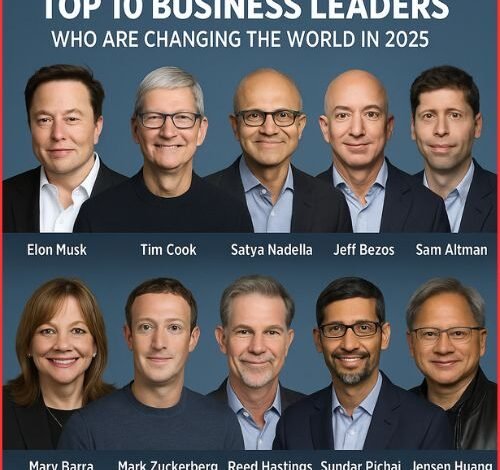
Leadership in today’s business world is evolving at unprecedented speed. As rapid tech advancements and shifting workforce dynamics reshape the landscape, organizations are being pushed to redefine what effective leadership looks like.
The world of business leadership is undergoing a profound transformation. As organizations confront rapid technological shifts, evolving employee expectations, and global disruptions, leaders must adopt new mindsets to stay ahead. The next generation of leadership will be defined by a blend of innovation, empathy, agility, and purpose. Here are the key trends that are reshaping leadership in 2025 and the years to come.
1. Human-Centered Leadership Takes Priority
Gone are the days when leadership was defined solely by metrics and performance. Today’s workforce values leaders who listen, empathize, and create environments where people feel supported and understood. Leaders who prioritize well-being and inclusivity are not just building stronger cultures—they’re driving higher engagement, loyalty, and long-term productivity.
2. Technology as a Leadership Superpower
Artificial intelligence, automation, and advanced analytics have moved from the periphery to the core of modern business strategy. Tomorrow’s leaders must be adept at leveraging data to make informed decisions, streamline operations, and elevate customer experiences. But the true differentiator will be the ability to blend data-driven intelligence with human judgment, creating balanced and forward-thinking strategies.
3. Agility in an Era of Uncertainty
Disruption has become a constant in the global marketplace. Whether navigating economic volatility, technological breakthroughs, or shifting consumer behavior, leaders must be resilient and adaptable. Success in 2025 depends on cultivating organizational agility, fostering a culture where experimentation, learning from failure, and rapid adaptation are not just encouraged—but expected.
4. Purpose-Driven and Sustainable Leadership
Sustainability is more than a corporate responsibility—it’s a competitive advantage. Modern stakeholders expect businesses to align with ethical practices, social impact, and environmental stewardship. Leaders who embed ESG (Environmental, Social, and Governance) principles into their strategic vision will build deeper trust and long-lasting relevance.
5. DEI as a Strategic Imperative
Diversity, Equity, and Inclusion have moved from buzzwords to essential leadership pillars. Inclusive leaders recognize that diverse teams drive greater creativity, stronger problem-solving, and a broader understanding of global markets. In the future, DEI won’t just be a program—it will be integrated into hiring practices, leadership development, and everyday decision-making.
6. A Culture of Continuous Learning
As the shelf-life of skills shortens, the importance of ongoing learning has never been greater. Leaders must champion professional development while also committing to their own growth. Through microlearning, reskilling initiatives, and structured learning programs, the most effective leaders will remain curious, adaptable, and ahead of industry shifts.
7. The Rise of Hybrid and Flexible Work
Flexible work is no longer a temporary shift—it’s a long-term reality. Leaders must reimagine collaboration, productivity, and culture in hybrid environments. The challenge lies in balancing flexibility with cohesion, ensuring that innovation and teamwork thrive across both digital and physical workspaces.
The Big Picture
The future of leadership is not defined by hierarchy or authority, but by the ability to lead with purpose, humanity, and adaptability. Organizations that embrace people-centered thinking, ethical innovation, and inclusive strategies will be the ones shaping the next era of business.
At Global Success Review Magazine, we believe that the leaders who excel in this new age will be those who recognize a fundamental truth:
success is measured not just by profit—but by impact, integrity, and lasting positive change.