
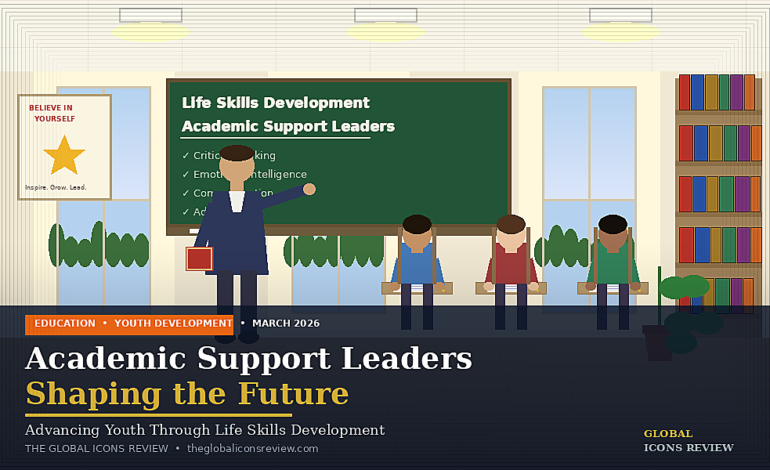
Academic Support Leaders Shaping the Future

Academic Support Leaders Shaping the Future

Empowering Youth Through Life Skills Development In an increasingly complex and interconnected world, young people face challenges that extend far beyond the classroom. Academic performance alone is no longer a reliable indicator of future success. While traditional education equips students with knowledge, the ability to apply that knowledge effectively in real-life situations depends on something equally important—life skills. Life skills development has become a cornerstone of modern youth education. These skills help young individuals build emotional resilience, strengthen communication, enhance problem-solving abilities, and adapt to rapidly changing environments. At the forefront of this transformation are academic support leaders—educators, mentors, and counselors dedicated to preparing young minds not only for exams, but for life. The Changing Landscape of Youth Development For decades, education systems primarily focused on cognitive subjects such as mathematics, science, and language. While these disciplines remain essential, the definition of being “future-ready” has evolved dramatically in the 21st century. Employers and organizations today increasingly value individuals who demonstrate collaboration, adaptability, emotional intelligence, and independent thinking. Meanwhile, rapid technological advancement, economic uncertainty, and social shifts continue to reshape global opportunities and challenges. These realities highlight the importance of holistic education models that prepare students beyond academic metrics. Life skills development bridges the gap between theoretical learning and real-world preparedness. By nurturing critical thinking, emotional regulation, digital literacy, and informed decision-making, students become better equipped to navigate both professional and personal environments. These abilities are no longer supplementary to education—they are fundamental to long-term success. Who Are Academic Support Leaders? Academic support leaders play a vital role in shaping well-rounded learners. Unlike traditional classroom educators who primarily focus on subject knowledge, these professionals take a broader and more personalized approach to student development. Academic support leaders include: Their work involves guiding students through both academic and personal growth journeys. They help students set meaningful goals, reflect on their progress, and develop strategies to overcome obstacles. Through personalized learning plans and mentorship programs, these leaders ensure that each student receives the support needed to unlock their potential. The Power of Life Skills in Personal Development Life skills refer to a set of psychosocial competencies that enable individuals to manage everyday challenges and make responsible decisions. Key life skills include: Research consistently shows that young individuals equipped with strong life skills are more likely to pursue higher education, secure meaningful employment, and actively participate in their communities. Moreover, these skills strengthen resilience, reduce risky behavior, and support mental well-being—factors that are increasingly important in today’s fast-paced and demanding world. Academic Support Leaders as Catalysts for Change Academic support leaders play an essential role in integrating life skills into educational environments. Rather than treating life skills as separate lessons, they embed them directly into everyday learning experiences. For example: These leaders also recognize that every student learns differently. Through mentorship, adaptive feedback, and continuous guidance, they support students in developing skills at their own pace. Mentorship programs, in particular, provide valuable guidance during critical phases of personal development. They help students build confidence, navigate setbacks, and develop a positive sense of self-worth. Equally important is the creation of inclusive and supportive learning environments where students feel respected, valued, and encouraged to express themselves openly. Challenges and Opportunities Ahead Despite the growing recognition of life skills education, implementation remains inconsistent across many schools and communities. Several challenges continue to limit widespread adoption, including: Addressing these challenges requires collaboration between governments, educational institutions, families, and communities. Holistic education must become a shared priority. Academic support leaders are already paving the way by advocating for learning models that combine intellectual growth with emotional and social development. Their work ensures that young people are not only prepared to pass examinations but also to thrive in real-world situations. Final Thoughts The future demands more than academic excellence. It requires individuals who can think critically, communicate effectively, adapt to change, and collaborate with empathy. By prioritizing life skills development and empowering academic support leaders, education systems can nurture not only successful students but also resilient, responsible, and innovative citizens. Through their dedication to holistic youth development, academic support leaders are shaping the next generation of thinkers, leaders, and changemakers who will define the future of our world.

Read More
 Employee Skill Development in the Age of AI

Employee Skill Development in the Age of AI

Preparing the Workforce for the Future The modern workplace is evolving at an unprecedented pace. Rapid technological advancement—particularly the rise of artificial intelligence—is transforming how organizations operate, make decisions, and define productivity. As a result, the skills required to succeed in the workforce are changing faster than ever before. For organizations aiming to remain competitive, relying on traditional competencies is no longer enough. Companies must rethink how they develop and nurture talent to ensure their workforce is prepared for the future. Employee skill development has therefore become one of the most critical strategic priorities for forward-thinking organizations. The Growing Reality of the Skills Gap The global workforce is experiencing a significant shift in required capabilities. According to research from the World Economic Forum, nearly 39% of core job skills are expected to change by 2030 due to automation and artificial intelligence. This transformation is already underway across multiple industries, including finance, healthcare, logistics, and creative sectors. Unlike previous technological revolutions, the current wave of AI-driven innovation affects both manual and knowledge-based roles. Tasks such as analyzing legal documents, writing marketing content, optimizing supply chains, and even assisting medical diagnosis are increasingly supported or performed by AI systems. As a result, organizations must go beyond teaching purely technical abilities. Employees now need a broader skill set that includes: These capabilities will help employees complement AI rather than compete with it. Continuous Learning Is the New Standard Traditional training models—where employees attend a workshop or complete a course once and retain that knowledge indefinitely—are becoming obsolete. Leading organizations now focus on creating continuous learning ecosystems that enable employees to grow consistently throughout their careers. Modern approaches include: Technology itself is also becoming a powerful enabler of employee development. Learning platforms such as Coursera and LinkedIn Learning leverage machine learning to analyze employee skill gaps and recommend personalized learning paths. Instead of reacting after performance declines, these systems proactively guide employees toward relevant training resources, creating a continuous feedback and improvement cycle. Turning Skill Development into Organizational Culture Successful companies understand that employee skill development cannot simply be an individual responsibility. Telling workers to “upskill or risk falling behind” without support often leads to frustration rather than progress. Research consistently shows that learning accelerates when organizations create an environment that encourages curiosity, experimentation, and psychological safety. Companies such as Microsoft and Unilever have demonstrated how leadership commitment can transform learning into a core part of company culture. For example, Microsoft has implemented strong internal mobility programs and provides employees with dedicated learning time. Managers are also evaluated on how effectively they support the growth and career progression of their teams. When skill development becomes a shared responsibility between employees and leadership, organizations benefit from higher engagement, stronger retention, and greater innovation. Technology Tools Powering Workforce Development Today’s organizations increasingly rely on integrated learning platforms powered by artificial intelligence. Tools such as Coursera for Business, LinkedIn Learning, and Microsoft Viva Learning embed learning directly into everyday work environments, making skill development more accessible and practical. Additionally, AI-driven productivity tools are helping employees learn while they work. Examples include: These technologies reduce time spent on repetitive tasks while helping employees focus on higher-value work that requires creativity, judgment, and strategic thinking. However, even the most advanced tools can only succeed when supported by a strong organizational learning culture. The Human Advantage in the AI Era As artificial intelligence becomes more integrated into business operations, the organizations that succeed will not simply be those with the most powerful technology. The real advantage will belong to companies whose employees know how to work alongside AI effectively. Human capabilities—such as curiosity, ethical reasoning, creativity, and critical thinking—will remain essential in guiding technology toward meaningful outcomes. These qualities do not develop automatically. They must be cultivated intentionally through continuous employee skill development, leadership support, and a culture that values learning. Final Thoughts Artificial intelligence is reshaping the future of work, but it also presents a powerful opportunity for organizations to elevate the role of human talent. Companies that invest in developing adaptable, skilled, and forward-thinking employees will be best positioned to thrive in the coming decade. At The Global Icons Review, we believe that the most successful organizations will be those that empower their workforce to grow continuously, collaborate with technology, and lead innovation in an increasingly intelligent world.

Read More
 Personal Branding Strategies for Founders & CEOs in the Modern Business Era

Personal Branding Strategies for Founders & CEOs in the Modern Business Era

In today’s digital-first world, a company’s reputation is influenced not only by its products or services but also by the personal identity of its leadership. Founders and CEOs are increasingly becoming the face of their organizations, shaping public perception, investor confidence, and customer trust. A strong personal brand is no longer optional—it has become a powerful strategic asset that strengthens credibility, attracts opportunities, and builds long-term influence. Below are the key personal branding strategies that modern business leaders should focus on today. 1. Prioritize Authenticity Over Perfection Modern audiences connect with leaders who are genuine and transparent. Instead of presenting a flawless image, successful founders openly share their journeys, including the obstacles, failures, and lessons that shaped them. Authenticity builds relatability and trust. When leaders communicate real experiences and meaningful insights, they create deeper connections with their audience. What works today: Authenticity ultimately strengthens credibility and influence. 2. Establish Clear Leadership Positioning Strong personal brands are built on clarity and consistency. People should quickly understand what you represent as a leader. Ask yourself: Focusing on two or three core themes and reinforcing them consistently across platforms helps build a memorable and recognizable leadership identity. 3. Build Visibility on the Right Platforms Founders and CEOs do not need to be everywhere online, but they must be present where their audience and stakeholders are active. High-impact platforms include: Consistency in messaging is far more important than posting frequently. 4. Share Thought Leadership, Not Just Achievements Personal branding should focus on providing value rather than promoting personal success. Effective content often includes: When leaders educate, inspire, and guide others, their personal brand grows naturally. 5. Align Personal Identity With Company Vision The most powerful leadership brands are closely connected to the organizations they lead. This alignment can be demonstrated when: When personal branding and company branding move in the same direction, they reinforce trust among customers, investors, and employees. 6. Strengthen Authority Through Media Presence Strategic media coverage plays a significant role in enhancing a leader’s reputation. Being featured in respected business publications provides several advantages: A single impactful feature or interview can significantly elevate a leader’s professional perception. 7. Demonstrate Human-Centered Leadership Modern leadership is no longer defined only by financial success. Audiences expect leaders to demonstrate empathy, responsibility, and purpose. Leaders who connect most effectively today: Human-centered leadership has become a key competitive advantage. 8. Maintain a Strong Digital Presence In the digital age, your online presence forms the first impression when someone searches your name. A strong digital footprint should include: Your online presence should communicate a clear and compelling leadership story. 9. Communicate With Confidence and Purpose Influential leaders do not chase attention—they earn it through clarity and conviction. Strong communication includes: Confidence combined with authenticity creates powerful leadership influence. 10. Focus on Long-Term Influence Personal branding is not about short-term visibility or viral popularity. It is about building a reputation that grows over time. The most respected business leaders: A well-developed personal brand becomes stronger and more influential over time. Final Thoughts In the modern business environment, personal branding has become an essential leadership tool. For founders and CEOs, it shapes credibility, trust, opportunities, and long-term success. Leaders who focus on authenticity, thought leadership, strategic visibility, and purpose-driven communication do more than build reputations—they create lasting influence. At The Global Icons Review Magazine, we celebrate visionary leaders who understand that true success begins with identity, values, and a clear vision for the future.

Read More