
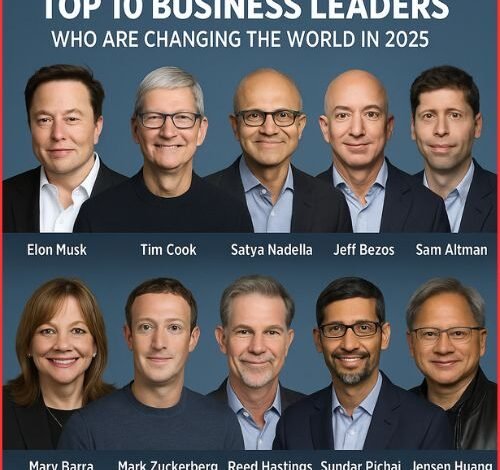

Top 10 Leadership Traits of the World’s Most Successful CEOs in 2025
As technology changes industries and global challenges reshape markets, the job of a CEO has become harder than ever. Today’s leaders face pressures that require new skills and sharper vision. The standout CEOs of 2025 are defined not only by financial achievements but by the way they lead—with vision, adaptability, empathy, and purpose. They combine strategic insight with technological fluency and a commitment to meaningful impact, setting new standards for global leadership. For emerging leaders, these traits are more than aspirations—they are essentials. In today’s world, leadership isn’t about authority; it’s about inspiring progress, empowering people, and building a legacy that creates lasting value far beyond profits. 1. Visionary Thinking The most exceptional CEOs look beyond current realities. They anticipate future trends, uncover hidden opportunities, and craft bold strategies that position their organizations to lead—not follow. In 2025, visionary thinking is about shaping industries rather than merely responding to change. 2. Adaptability From global disruptions to rapid technological shifts, change has become the norm. Successful CEOs pivot quickly, stay flexible in strategy, and foster a culture where agility is embraced rather than feared. 3. Emotional Intelligence (EQ) Empathy and self-awareness are now core leadership requirements. CEOs who genuinely connect with people—employees, customers, and partners—create stronger cultures and nurture long-term trust. EQ remains a defining trait of effective leadership in 2025. 4. Tech-Savviness Modern CEOs must understand technology deeply—from artificial intelligence and automation to data analytics and blockchain. The most successful leaders champion digital transformation and encourage tech-driven innovation across every level of their organizations. 5. Decisiveness Uncertainty demands bold decision-making. Exceptional CEOs make clear, timely choices and stand behind them. Their ability to act decisively—even without perfect information—builds confidence and fuels forward momentum. 6. Commitment to Sustainability In 2025, businesses are evaluated not just on profit, but on purpose. Leading CEOs embed sustainability into their strategies, balancing financial performance with environmental and social responsibility. Purpose-led leadership has become a powerful competitive advantage. 7. Masterful Communication The best leaders know how to inspire through words. They communicate transparently, clearly, and consistently—whether addressing teams, investors, or the global public. They simplify complexity and unite people around a shared mission. 8. Resilience Under Pressure Economic uncertainty, global crises, and unexpected disruptions test every leader. What elevates great CEOs is their resilience—the ability to stay calm, focused, and strategic during tough moments while guiding their teams with confidence. 9. Advocacy for Inclusivity & Diversity Diverse teams lead to stronger innovation and better decisions. Forward-thinking CEOs foster inclusive workplaces where every voice is valued. They understand that diversity reflects the global customers and communities they serve. 10. Continuous Learning Industries are evolving faster than ever. Top CEOs remain lifelong learners—they seek new knowledge, welcome fresh perspectives, and continually upgrade their skills. Their growth mindset keeps both themselves and their organizations competitive.
Read More